[22] O-GlcNAcylation of MITF regulates its activity and CDK4/6 inhibitor resistance in breast cancer
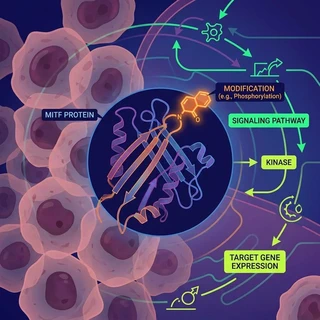 MITF Modification
CDK4/6 inhibitors (e.g., palbociclib) have revolutionized the treatment of hormone receptor-positive breast cancer. However, resistance inevitably emerges, leading to treatment failure. Understanding the mechanisms of this resistance is crucial for developing next-generation therapies.
In this study, we identified a novel mechanism of resistance involving the transcription factor MITF (Microphthalmia-associated Transcription Factor). We found that MITF is post-translationally modified by O-GlcNAcylation, a sugar modification that significantly enhances its stability and transcriptional activity.
Our deep dive revealed:
- The Mechanism: High glucose metabolism in cancer cells drives O-GlcNAcylation of MITF.
- The Consequence: Modified MITF promotes the expression of cell cycle regulators that bypass the CDK4/6 blockade.
- Targeting the Pathway: Inhibiting the O-GlcNAc transferase (OGT) or downstream MITF targets re-sensitizes resistant cells to therapy.
This work links cancer metabolism (glucose usage) directly to drug resistance via a specific molecular switch, offering new targets for combination therapies.