[14] Transcription factor competition at the γ-globin promoters controls hemoglobin switching

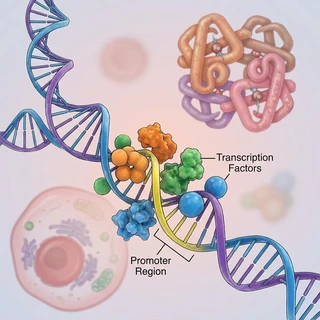 Transcription Factor Competition
Hemoglobin switching involves the silencing of fetal gamma-globin genes and the activation of adult beta-globin genes. While BCL11A is known as the master repressor, the precise molecular mechanism of its action at the promoter level remained elusive.
By integrating high-resolution genomic data with thermodynamic modeling, we demonstrated a transcription factor competition model. We found that BCL11A does not merely sit on the DNA to block access; it actively competes with transcriptional activators (such as NF-Y and LRF) for binding to overlapping motifs at the CCAAT box region of the gamma-globin promoters.
Key findings include:
- Direct Competition: The binding of BCL11A mutually excludes the binding of ubiquitous activators.
- Thermodynamic Control: The outcome of the switch is determined by the relative concentrations and binding affinities of these competing factors.
- Therapeutic Implications: Disrupting the BCL11A binding site tips the balance in favor of activators, leading to HbF re-induction—a strategy now utilized in gene therapies for Sickle Cell Disease and Beta-Thalassemia.
This study provides a mechanistic framework for understanding how repressor-activator interplay dictates cell fate decisions.
