[5] Predicting CTCF-mediated chromatin interactions by integrating genomic and epigenomic features

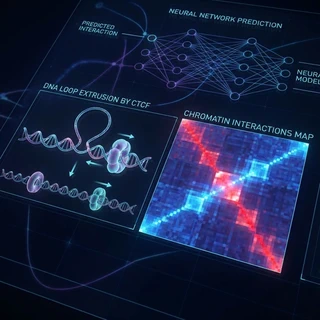 CTCF Prediction Model
CTCF (CCCTC-binding factor) is often called the “master weaver” of the genome, creating the 3D loops and domains that organize our DNA. While there are thousands of CTCF binding sites, only a fraction of them form loops. Predicting which pairs of CTCF sites interact is a major challenge in understanding 3D genome architecture.
We addressed this by developing a predictive model that integrates:
- Motif Orientation: The convergent orientation of CTCF motifs is a strong predictor, but not sufficient on its own.
- Epigenomic Features: We incorporated histone modification data, chromatin accessibility, and co-factor binding.
- Genomic Distance: The distance between sites is a key constraint.
Our model accurately predicts chromatin loops in varying cell types and highlighted the importance of RNA Polymerase II and Cohesin in stabilizing these structures. This work represented a step forward in “in silico” folding of the genome, allowing us to predict the impact of mutations on 3D structure and gene regulation.
