Summary

I am an AI × Omics researcher in drug discovery and development. I am currently a Principal Scientist at Bristol Myers Squibb, where I focus on integrating AI with large-scale biological data to accelerate the discovery of protein degraders (e.g., molecular glues and PROTACs) and induced-proximity therapeutics (e.g., RIPTACs).

My work spans the full drug discovery pipeline—from target identification and validation to lead optimization and clinical development. I am particularly interested in the following questions:

  • How can we model multi-modal, noisy, and heterogeneous biological data across scales to better understand disease biology and drug response?
  • How can AI be used to design novel therapeutics with desired molecular and pharmacological properties?
  • How can large language models and AI agents accelerate drug discovery, from target identification and hypothesis generation to patient stratification and clinical trial design?

To address these challenges, I develop and apply AI/ML methods to large-scale biological datasets, including genomics, transcriptomics, proteomics, and CRISPR screens. I also build AI agents that support decision-making across drug discovery and development.

Previously, I completed my research fellowship training at Harvard Medical School and Dana-Farber Cancer Institute, working with Dr. Stuart Orkin and Dr. Guo-Cheng Yuan. I received my Ph.D. from George Washington University (with Dr. Weiqun Peng and Alexandros Tzatsos).

Featured Publications
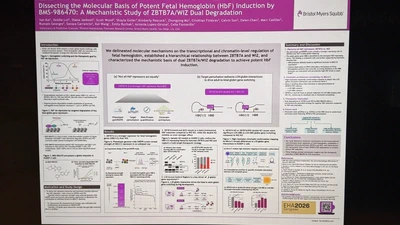
[25] DISSECTING THE MOLECULAR BASIS OF POTENT HBF INDUCTION BY BMS-986470: A MECHANISTIC STUDY OF ZBTB7A/WIZ DUAL DEGRADATION featured image

Molecular Basis of HbF Induction by BMS-986470: ZBTB7A/WIZ Dual Degradation

We delineated the transcriptional and chromatin-level mechanisms of HbF regulation by BMS-986470, a first-in-class CELMoD that dually degrades ZBTB7A and WIZ, and established a …

y-kai
•
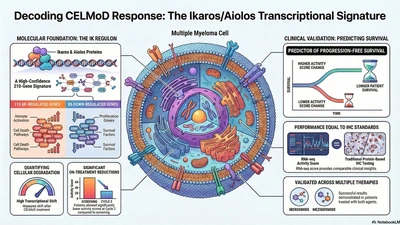
[24] Development of a novel Ikaros/Aiolos transcriptional signature and correlation with patient response in multiple myeloma patients treated with CELMoDs featured image

An RNA-seq Biomarker for CELMoD Response in Multiple Myeloma

We developed a quantitative RNA-seq based Ikaros/Aiolos activity score that is significantly associated with patient progression-free survival in multiple myeloma patients treated …

s-tamim
•
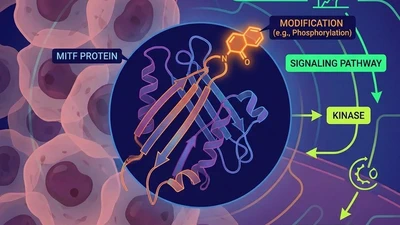
[22] O-GlcNAcylation of MITF regulates its activity and CDK4/6 inhibitor resistance in breast cancer featured image

Sugar Coating Drives Drug Resistance in Breast Cancer

We identified O-GlcNAcylation as a critical regulator of MITF activity, driving resistance to CDK4/6 inhibitors in breast cancer.

y-zhang
•
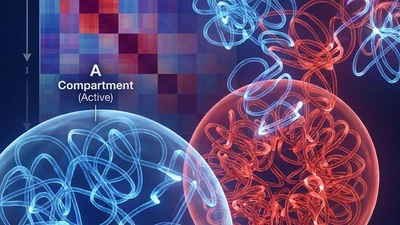
[19] Identifying Quantitatively Differential Chromosomal Compartmentalization Changes and Their Biological Significance from Hi-C data using DARIC featured image

Detecting Compartment Switches in the 3D Genome

We developed DARIC (Differential Analysis of Regulated In-Compartments) to systematically identify significant chromosomal compartmentalization changes from Hi-C data.

avatar
Yan Kai
•
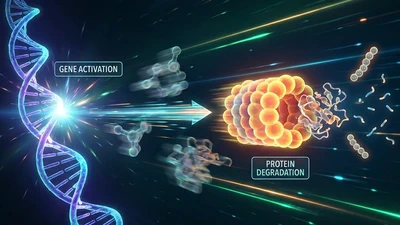
[15] Temporal resolution of gene derepression and proteome changes upon PROTAC-mediated degradation of BCL11A protein in erythroid cells featured image

Real-Time Kinetics of Gene Derepression via PROTAC

Using PROTAC technology, we resolved the precise kinetics of hemoglobin switching, revealing that transcription activation precedes chromatin remodeling.

s-mehta
•
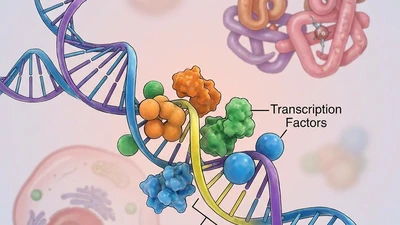
[14] Transcription factor competition at the γ-globin promoters controls hemoglobin switching featured image

The Molecular Tug-of-War Behind Hemoglobin Switching

We uncovered a direct competition mechanism between BCL11A and other activators at the gamma-globin promoter, determining the developmental switch.

n-liu
•
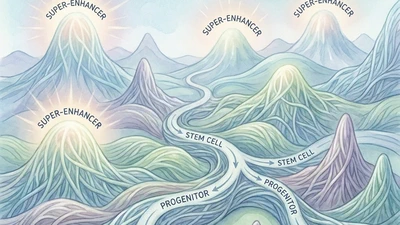
[13] Mapping the evolving landscape of super-enhancers during cell differentiation featured image

Charting the Evolving Landscape of Super-Enhancers

We mapped the dynamic landscape of super-enhancers during erythroid differentiation, revealing how these large regulatory elements evolve to drive cell identity.

avatar
Yan Kai
•
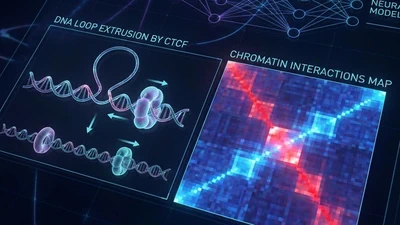
[5] Predicting CTCF-mediated chromatin interactions by integrating genomic and epigenomic features featured image

Predicting the 3D Genome with Machine Learning

We developed a machine learning framework to predict 3D chromatin loops mediated by CTCF, integrating genomic motif orientation with epigenomic features.

avatar
Yan Kai
•
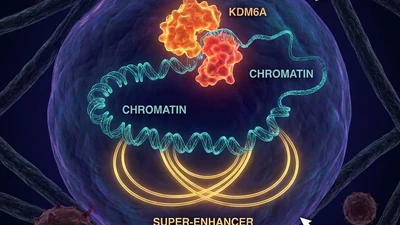
[8] Loss of KDM6A Activates Super-Enhancers to Induce Gender-Specific Squamous-like Pancreatic Cancer and Confers Sensitivity to BET Inhibitors featured image

How Losing an Epigenetic Eraser Drives Pancreatic Cancer

We found that loss of the histone demethylase KDM6A activates a specific super-enhancer program, driving a distinct, aggressive subtype of pancreatic cancer.

j-andricovich
•